
Wednesday, April 29, 2015
CSG 110 Part 13: Preparation
Our instructor wasn't here today, so we're on our own to re-edit our pitch presentation and out LTV. In our first pitch, we made the mistake of putting our numbers before actually pitching the game. We've decided to reverse it and hook the audience with the game first, then reel them in with our amazing numbers, which won't be shit this time.


CSG Part 12: The Cover
Our goal for this week was get finished box art for our game using psyberfire and SCRUM management. It took us 3 threes to turn out a shitty cover. The first try was a mess because we didn't communicate or use psyberfire. The second try was a little bit better because communicated, but development still fell through because we still didn't have any tasks setup in psyberfire. After we finally got tasks setup in psyberfire (after having to teach a few people, including myself, how to use psyberfire) we finally got a cover done. It looks shit, but I blame that on our inability to get organized and setup tasks in the beginning.

I'm pretty sure we were setup to fail, which is okay. You learn more when you fail, and this is probably one of those situations.
I'm pretty sure we were setup to fail, which is okay. You learn more when you fail, and this is probably one of those situations.
CSG 110 Part 11: The Beast with 3 Heads
We started out our practice development by playing a gameified version of Agile Development called Agile Heroes, developed by Emil. We drew up a boss monster that represents bad qualities in leadership such as arrogance or laziness. Our goal was to kill the monster by the end of the training.
There was also a guy there who would roll a die that would make development harder. At points we could only communicate through singing, or only work every other minute.

It was absolute chaos. No one knew what they were doing or how to get organized; communication broke down immediately; cats and dogs living together, mass hysteria. I wasn't really being a leader, but after a break and some healthy criticism, we finally got organized. We communicated much better and handled the chaos rolls better. In the end, we only managed to hack off 200 health points of the boss, but we'll get him yet.
There was also a guy there who would roll a die that would make development harder. At points we could only communicate through singing, or only work every other minute.

It was absolute chaos. No one knew what they were doing or how to get organized; communication broke down immediately; cats and dogs living together, mass hysteria. I wasn't really being a leader, but after a break and some healthy criticism, we finally got organized. We communicated much better and handled the chaos rolls better. In the end, we only managed to hack off 200 health points of the boss, but we'll get him yet.
CSG 110 Part 10: Way of the Agile
We officially began learning Agile and SCRUM, which as it turns out, it a tool of Agile. Does this mean that there are other forms of Agile development? I learned about iterations and pivoting, and that Agile allows for fast development, openness, and fast reflexes.
We learned about the Lean Method and the Minimum Viable Product, how we strive for a vertical slice of our game as a primary.
 I was told that we were going to use a board game I designed last semester as practice for Agile Development. I pitched my game at the end of class and we played a few a rounds. We're aiming to make this into a full 3D digital game.
We learned about the Lean Method and the Minimum Viable Product, how we strive for a vertical slice of our game as a primary.

CSG 110 Part 9: History
We watched a documentary on the history of the video game industry narrated by Sean Astin. It covers the first video game ever (Space War!), and the start of Atari with Nolan Bushnell and Al Alcorn. Atari's poor business practices and the over saturation of shitty products that led to collapse of the market. Nintendo and Sega rose out of the ashes and started the first console war, and then the coming of the modern Xbox and PlayStation.

We're going to start learning how to use Agile business management and SCRUM. I know a little bit of SCRUM already from Intro to Game Design, but it's better to have an official education in SCRUM.
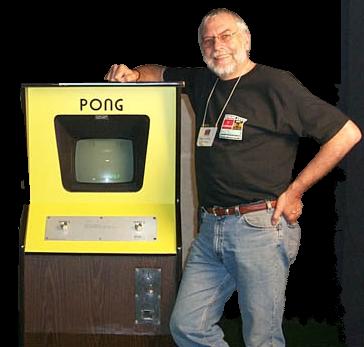
We're going to start learning how to use Agile business management and SCRUM. I know a little bit of SCRUM already from Intro to Game Design, but it's better to have an official education in SCRUM.
Subscribe to:
Posts (Atom)